
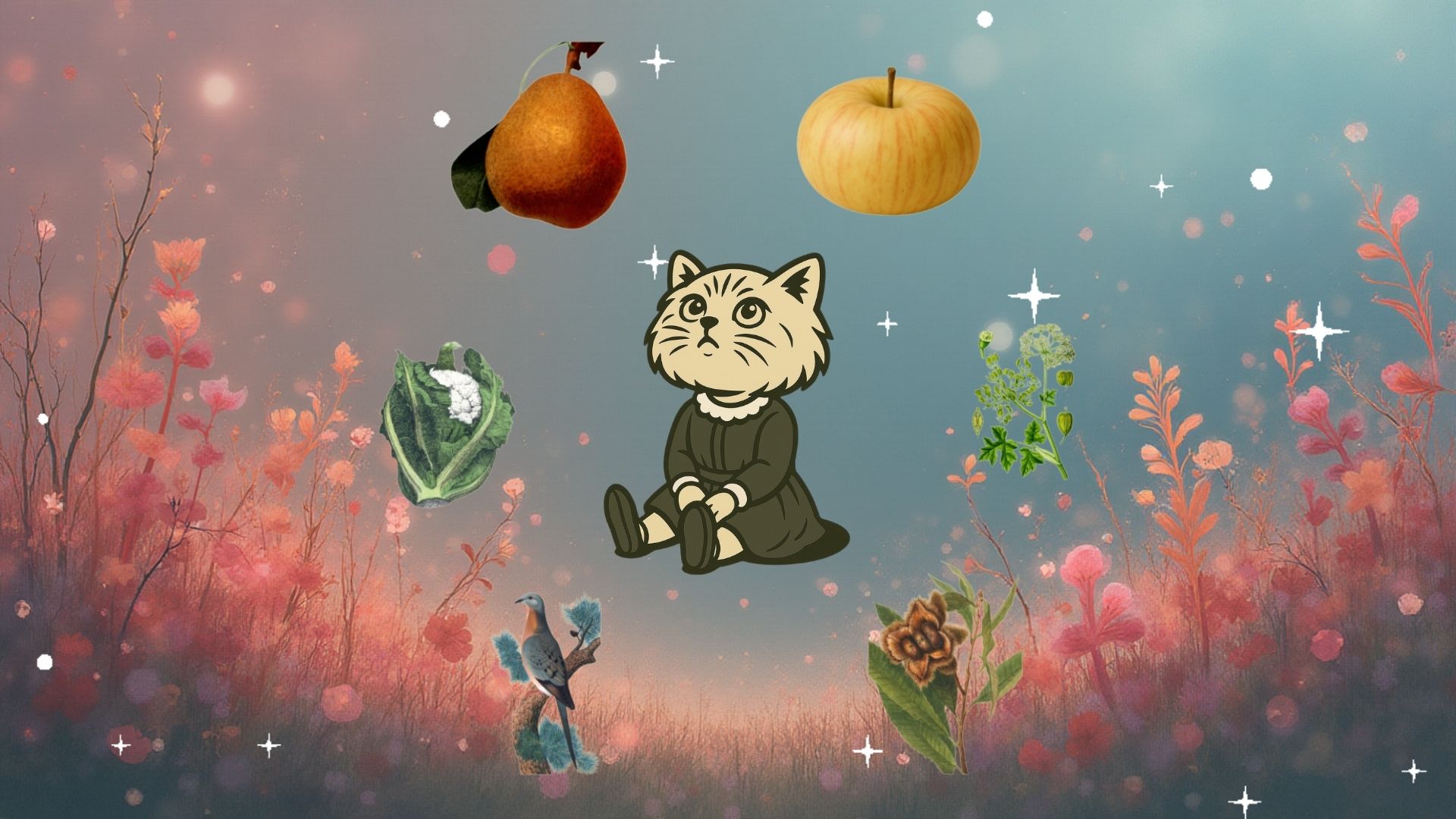
Picture a pear so smooth you could spread it like butter. Or a herb so rare the Romans stored it alongside gold.
These six foods are gone forever, but their flavors survive in the words of those lucky enough to have tasted them.
History is full of things we’ve lost, empires, languages, species. But among the quietest losses are the foods that vanished: flavours no living person has ever tasted.
Let’s look at six of those extinct foods. What they were, why they disappeared, and what they once tasted like.
Watch the video below if you don’t want to read the entire post. Some cool animations in there.
1. Silphium, The Luxury Herb

Long before modern spice racks, there was Silphium, and nothing else came close.
Discovered by ancient Greeks in the North African hills of what is now Libya, this plant was considered nothing short of miraculous.
It wasn’t just a seasoning. Ancient texts credit Silphium, also known as Laser, with the ability to treat wounds, ease upset stomachs, and even function as a form of birth control.
Hippocrates himself wrote detailed instructions for its medicinal use. It was, by ancient standards, a superhero plant.
The Romans adored it. They stored Silphium in their treasury vaults alongside gold reserves. It appeared on Roman and Greek coins, a mark of just how economically significant it was.

Wealthy citizens demanded it in their finest dishes, and merchants grew extraordinarily rich supplying it.
But Silphium had one fatal flaw: it grew only in the wild, in a narrow coastal strip of North Africa, and it refused every attempt at cultivation.
As demand exploded, the plant had nowhere left to hide. Overharvesting stripped it from its native habitat, stalk by stalk.
By the reign of Emperor Nero (54–68 AD), the last known specimen was reportedly presented to him as a curiosity. It was never seen again.
Silphium is considered by many historians to be the first documented case of food extinction.
🌿 What did it taste like?
Ancient texts describe Silphium as intensely aromatic and pungent. Somewhere between fennel and asafoetida, with a deep, savoury sweetness underneath. Think of the most complex, layered herb you’ve ever tasted, then imagine it being irreplaceable.
Passenger Pigeon, The Bird That Filled the Skies

Imagine standing outside in 19th-century America and looking up at the sky for hours, and seeing nothing but birds.
A flock so vast and so dense that, when they settled in the trees to roost, the branches bent and snapped under their collective weight.
That was the Passenger Pigeon.
At its peak, the species numbered around 5 billion individuals, making it arguably the most abundant bird that has ever lived on the Planet.
French explorer Jacques Cartier first documented them in 1534, marveling at the sheer scale of their presence.
And then humanity ate them. All of them. Seriously! Humans don’t know how to control.
Industrial-scale hunting began in earnest around 1870. The birds were cheap, abundant, and easy to kill in massive numbers.
They were shipped in barrels to city markets. They fed armies and the urban poor alike.
The last confirmed wild bird was shot in 1900.
On September 1st, 1914, the last known Passenger Pigeon, a female named Martha, died alone in her enclosure at the Cincinnati Zoo. A species of 5 billion, gone in a generation.
🌿 What did it taste like?
Contemporary accounts describe the meat as dark, tender, mild, and non-gamey , most similar to modern squab or wild duck. It was, by all accounts, genuinely delicious. That appeal, tragically, is what sealed its fate.
3. Ansault Pear, Smooth as Butter

The Ansault Pear, pronounced Ahn-soh, began its brief life in 1854 in the French town of Angers, bred by horticulturalist André Leroy.
First cultivated in 1863, it spread quickly: to Britain, to the United States and France. To the tables of anyone who could get their hands on it.
On the outside, it looked like any ordinary pear. Inside, it was extraordinary.
Tasters of the era described a fruit of the highest quality, sweet and perfumed, with a flesh so smooth and yielding that it could be spread like butter.
Not like butter in a loose, poetic sense. Literally like butter.
But the Ansault was a difficult fruit to grow. The trees were weather-sensitive, high-maintenance, and altogether poorly suited to the demands of commercial agriculture.
By the early 1900s, farmers had lost patience. They switched to hardier, more profitable varieties — Bartlett and Anjou — that could survive the perils of large-scale farming.
The Ansault Pear, needing too much care and offering too little return, quietly disappeared.
🌿 What did it taste like?
Tasters used the words “sweet,” “perfumed,” and “buttery”. A flesh so fine it dissolved rather than was chewed. A pear that demanded to be savoured slowly, alone.
4. Taliaferro Apple, Thomas Jefferson’s Favourite

In 1814, Thomas Jefferson wrote a letter to his granddaughter. In it, he called the Taliaferro Apple (pronounced Toliver) the source of “unquestionably the finest cyder we have ever known.”
From a man who spent decades refining his orchards at Monticello, that was no casual praise.
The apple’s origin is suitably American. In the mid-18th century, a Virginia landowner named Major Richard Taliaferro noticed a lone, unusually productive apple tree growing wild in an old field near Williamsburg.
Jefferson later encountered the variety, was immediately captivated, and planted hundreds of its trees at Monticello.
But Jefferson’s enthusiasm didn’t outlive him. After his death, the trees fell into neglect. The variety never spread beyond his orchard.
The trees were short-lived and had no commercial appeal. By the late 19th century, the Taliaferro Apple had quietly vanished from history.

“Its cider tasted more like wine than any other liquor which was not wine.” — Thomas Jefferson
🌿 What did it taste like?
The flesh was described as juicy with a sprightly, acidic flavour. Reminiscent of clear wine or champagne. That bracing acidity made it ideal for fermentation into a remarkably refined, wine-like hard cider.
5. American Chestnut, King of the Forest

For thousands of years, the American Chestnut was the undisputed king of the Eastern United States forests. It towered above the landscape. Its canopy provided shade and shelter.
Its nuts fed humans, bears, deer, and countless other animals throughout the long American autumn. It was said that a squirrel could travel from New England to Georgia without ever touching the ground, moving entirely through the interlocking branches of Chestnut trees.
In 1904, a tiny fungus arrived at the Bronx Zoo in New York, accidentally imported on Asian Chestnut trees. The fungus, Cryphonectria parasitica, known as Chestnut Blight, was harmless to its Asian hosts but catastrophic to the American species, which had no natural resistance.
Within 40 years, nearly 4 billion American Chestnut trees were dead.
By the 1950s, the tree was functionally extinct.
Some root systems still send up new shoots today, but the blight kills them before they can mature and fruit.
Scientists are currently working on blight-resistant hybrid trees.
Whether future generations will taste an American Chestnut remains an open and hopeful question.
🌿 What did it taste like?
Witnesses describe the nuts as sweet and creamy, with a texture close to a baked sweet potato. A single mature tree could yield up to 6,000 chestnuts per season, an extraordinary abundance, now entirely absent from American landscapes.
6. Old Cornish Cauliflower, Before the Hybrids Arrived

Cauliflower is everywhere today. On supermarket shelves, in meal kits, roasted and riced and turned into pizza bases.
But the cauliflower we eat now is not the cauliflower that once grew in Cornwall.
The Old Cornish Cauliflower was a hardy, heritage variety that did something remarkable: it survived the devastating ringspot virus that wiped out other Brassica crops across Britain.
While other varieties collapsed, the Cornish cauliflower held on.
Locals swore by it. It became a source of regional pride, a crop so highly regarded it was being exported to France by the early 1900s.
Then came the mid-century, and with it the logic of industrial agriculture.
French hybrid varieties could grow faster and travel better, two qualities that mattered enormously to supermarkets and distributors.
The Old Cornish, superior in flavour but slower and less durable, couldn’t compete.
By the 1950s, it was gone. 🙁
🌿 What did it taste like?
Those who grew up eating it describe the texture as tender and creamy, with a mild natural sweetness and significantly more flavor than the pale, bland varieties we eat today.
A Flavor Lost Is a Story Lost
Each of these foods tells a larger story, about human greed, about the fragility of biodiversity, about the hidden costs of convenience.
- We lost Silphium because we couldn’t stop harvesting it.
- We lost the Passenger Pigeon because we couldn’t stop hunting it.
- We lost the Ansault Pear and the Taliaferro Apple and the Old Cornish Cauliflower because, in the calculus of modern farming, flavour lost to durability and profit.
What we eat shapes the world. And the world, in turn, shapes what we’re able to eat.
If you could taste one of these lost foods, which one would it be? Leave your answer in the comments
And if you found this post interesting, you might enjoy the other posts like this or this from Greek Mythology companion video on the Madame Curieus YouTube channel.